
A collector visits your exhibition opening. They spend twenty minutes talking with a member of your team. They ask thoughtful questions about an artist. They request pricing information before they leave. Everyone walks away feeling like the conversation went well.
Three weeks later, nobody followed up.
The pricing information was sent, but no one recorded what pieces interested them. The salesperson who had the conversation has been focused on installing the next exhibition. The collector’s name is sitting somewhere in an inbox, mixed in with dozens of other emails.
Nothing terrible happened. No one made a major mistake. Yet an opportunity quietly disappeared. This is how sales funnel leaks happen in so many art galleries. Through small gaps in the process that compound over time.
Gallery owners often spend a lot of energy thinking about how to attract collectors. They invest in exhibitions, events, social media, newsletters, public relations, and partnerships. All of those activities matter. They help create awareness and generate interest.
What happens after that interest appears deserves just as much attention. That’s what we are going to talk about here. Because every gallery already has a sales funnel. The question is whether the systems supporting it are strong enough to keep opportunities moving forward.
What a Gallery Sales Funnel Actually Looks Like
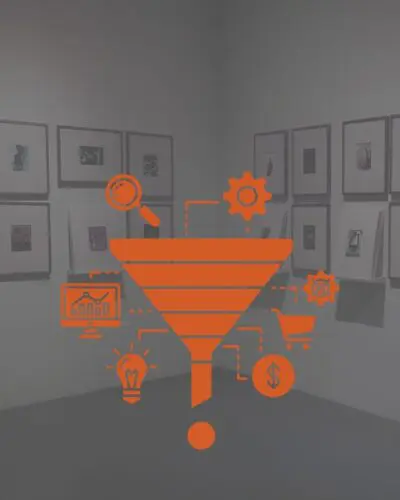
At its simplest, a sales funnel describes how someone moves from discovering your gallery to becoming a collector.
The journey usually begins with awareness. A prospective collector discovers your gallery through social media, a recommendation, an exhibition, a community event, an online search, or local press coverage. From there comes engagement. They follow your gallery, attend an opening, subscribe to your newsletter, or spend time exploring your website. They’re interested enough to learn more. The consideration stage is where the relationship starts to deepen. They inquire about a specific work, ask questions about an artist, request pricing, or return to see an exhibition a second time. They are actively evaluating whether a purchase makes sense.
Conversion is the sale itself, but the funnel doesn’t end there. Retention is what happens after the purchase. It includes follow-up, future exhibitions, referrals, and the ongoing relationship that often leads to repeat sales.
Most gallery owners understand these stages intuitively. The challenge is building the systems that support it.
The Supporting Systems for a Successful Gallery Sales Funnel
When an exhibition underperforms, it’s tempting to focus entirely on the outcome. The reality is that sales outcomes are often the result of dozens of small actions that either happened or didn’t happen throughout the buyer journey.
- Perhaps someone attended an opening, but nobody captured their information.
- Maybe a prospective collector requested pricing and never received meaningful follow-up.
- Perhaps a team member had an excellent conversation at an art fair, but the details remained buried in a notebook.
- Or maybe years of collector knowledge exist only inside one salesperson’s inbox.
None of these situations are unusual. In fact, they’re incredibly common. They’re also examples of systems problems rather than sales problems. Once you begin looking at your sales funnel through a systems lens, it becomes easier to identify where opportunities are slipping away.
The Most Common Art Gallery Sales Funnel Leaks
The first leak I see regularly is when good conversations disappear.
Most galleries meet far more potential collectors than they realize. A collector expresses interest in a particular artist. Someone else asks about commissions. Another visitor mentions they are furnishing a new home and planning to purchase over the next twelve months. Those details are valuable.
Yet they often end up on scraps of paper, inside personal notebooks, buried in email threads, or stored entirely in memory. Months later, the gallery remembers the person but not the conversation.
Every meaningful interaction should have a place to live. Don’t think of it as creating more administrative work. The goal is to ensure that promising relationships don’t disappear simply because nobody recorded them.
The second leak is an inconsistent follow-up.
Gallery sales rarely happen in a single conversation. (although we love it when they do) Collectors often need time to think, discuss purchases with a partner, consider available wall space, review finances, or simply live with an idea before making a decision.
Without a follow-up process, every salesperson develops their own habits. Some follow up diligently. Others get distracted by the next exhibition, shipping deadline, artist request, or administrative task. Consistency really matters here. A simple follow-up workflow creates structure and ensures opportunities continue moving forward even during busy periods.
The third leak is fragmented information.
Many galleries are managing collector relationships across inboxes, spreadsheets, notebooks, text messages, and individual memories. The result is that nobody has a complete picture of the relationship. A collector’s preferences, past purchases, artist interests, objections, and previous conversations should not require detective work to uncover. You need to have this information at your fingertips quickly.
The strongest galleries create a shared record of the sales story. Anyone on the team can quickly understand where a relationship stands, what has happened so far, and what should happen next. There are many platforms and methods of doing this. You need to find the one that best fits how you and your team actually work day-to-day and is flexible enough to evolve as your gallery grows.
The fourth leak is a lack of sales support resources.
Think about how often your team answers the same questions. Who is this artist? How does purchasing work? What are the dimensions? What does the work look like installed? How should it be framed? What happens after purchase? When those answers must be recreated every time, valuable time gets lost, and the buyer experience becomes inconsistent.
Building a library of artist materials, installation images, frequently asked questions, collector resources, and exhibition information gives your team tools they can use repeatedly while creating a more professional and consistent experience. It also helps leadership ensure that messages are on brand across the team and different sales styles.
Bringing It All Together
Each stage of your sales funnel requires a different type of support system.
| Funnel Stage | Primary Goal | Common Leak | Supporting System |
| Awareness | Help new people discover your gallery | Limited visibility | Marketing and content systems |
| Engagement | Capture interest and begin relationships | Visitor information is lost | Lead capture system |
| Consideration | Support buying decisions | Questions remain unanswered | Sales support resources |
| Conversion | Maintain momentum toward a sale | Inconsistent follow-up | Follow-up workflow |
| Retention | Strengthen long-term relationships | Information becomes fragmented | CRM and collector management system |
Looking at your funnel this way can help clarify where improvements will have the greatest impact.
A gallery struggling to attract new prospects has a different challenge than a gallery generating plenty of inquiries but failing to follow up consistently. Likewise, a gallery with strong engagement but weak conversion may not need more marketing. It may need stronger sales systems.
To the Point

Your sales funnel is only as strong as the systems supporting it. Small to mid-sized art galleries are the backbone of the art world and their success is vital. Soft art markets expose weak systems. The fix is a clearer path from curiosity to purchase, and you can build that.
When leads aren’t captured, opportunities disappear. When follow-up is inconsistent, momentum fades. When information is scattered across inboxes and notebooks, relationships become harder to manage. Over time, these small gaps create significant leaks in the sales funnel.
The good news is that most of these problems are fixable.
- Start by looking at how information moves through your gallery.
- Where are leads captured?
- How is follow-up managed?
- Where do collector conversations live?
- How does your team access important information?
- What resources support the sales process?
The answers will quickly reveal where your biggest opportunities for improvement exist.
Strong sales funnels are built through consistent processes that support relationships over time. When those systems are in place, your gallery is better equipped to nurture prospects, strengthen collector relationships, and create a more reliable path from first inquiry to final sale.
I help my clients run their art gallery as a modern business through a bespoke operating system built in Notion that connects their sales, marketing, and operational strategies to their day-to-day tasks and decisions.
Why not schedule a discovery call to see if I can help you build a stronger sales funnel?


Leave a Reply