 Both art galleries and museums have been asking themselves, “How do you stay relevant when people have endless options for their time, attention, and money?” Since museums tend to have more resources to put into this problem than small art galleries, I like to watch what they do carefully to find ways art galleries could do the same to grow and engage their audience. Museums have invested serious research into answering it, and the results have reshaped how they design exhibitions, run events, and communicate with their audiences. In this article, let’s look at which ideas you can steal.
You compete for many of the same patrons, which makes this research worth your attention. The strategies museums are using to win audiences back apply to a gallery with a staff of three just as much as they apply to an institution with an endowment.
Challenges Faced by Museums and Art Galleries
Today’s art museum no longer operates only as a voice of authority and a preserve for cultural treasures. Although that is still a big part of their role in society. Museums now compete for people’s time like any other experience business, and they have adapted accordingly in some interesting ways. Their visitors want to engage, participate, and feel something when they walk through the door. Your prospective collectors want the same thing.
The pressures are real, and recent data tells the story. In its Fall 2025 survey, the American Alliance of Museums found that 55% of U.S. museums still attract fewer visitors than they did in 2019, and that recovery has slipped backward from the year before. Actually, nearly a third of museums reported attendance declines in 2025, pointing to weaker tourism and economic uncertainty. About 33% of American adults visited a museum in the past year, slightly above pre-pandemic levels. People are willing to show up. What seems to have changed is how often they return. Repeat visitation has settled into a slower rhythm than before the pandemic.
Here are the findings that matter most for galleries in some ways, depending on location and business model.
- Standing out as a destination when people have endless choices for their time and money.
- Turning a first visit into a habit of returning, since frequency drives attendance now.
- Giving visitors ways to participate rather than just observe, especially younger audiences.
- Reaching beyond the traditional audience of collectors and longtime patrons.
- Using partnerships to extend reach and resources without stretching staff too thin.
Commercial galleries face every one of these pressures with fewer staff and smaller budgets. That is exactly why I think museum strategy deserves studying. Museums have already paid for the research, and the lessons transfer.
How Museum Strategy is Evolving to Address the Challenges
Exhibition Design:
Museums design temporary exhibitions around an overarching theme or story that connects the show as a whole, and they tell that story in multiple ways throughout the space. When everything went digital during Covid, museums added virtual experiences, and those have stayed on as complements to in-person visits. Permanent collections get reconfigured on a regular basis to keep repeat visitors engaged.
The newer move that we have all seen over the last few years is immersion with intention. Museums are embracing immersive, multi-sensory environments, and your gallery is not likely to replicate that. But the trend now favors depth over dazzle and you can move in that direction. An installation succeeds when it deepens understanding of the art and invites participation, and it falls flat when it serves as nothing more than a backdrop for photos.
Gallery Takeaway: Your obligation to your artists to exhibit their work may provide some constraints, but plan to curate three or four exhibitions a year with the overall story in mind that your prospective buyers can relate to directly. Use these exhibitions as an opportunity to create a fresh buzz about your gallery and artists. Consider guest curators for support and present established artists in with alternative viewpoints to draw new buyers’ interest.
Co-Creation:
Museums have shifted from designing exhibitions for their communities to designing them with their communities. Community advisory panels, open calls for stories and objects, and partnerships with local groups now shape what goes on the walls. Museum leaders describe this as a practice so valuable that they expect future teams will wonder how anyone curated without it.
Gallery Takeaway: You don’t need a community engagement department to borrow this idea. Invite a small group of collectors to preview works before you finalize an installation, and let their reactions inform the hang. Ask a local designer, chef, writer, or fellow creative to respond to a show and share their perspective with their own audience. Run an open call for a summer group show featuring regional artists. When people see their fingerprints on an exhibition, they show up for it, and they bring friends who trust their taste.
Education & Experience:
Museums are providing more supporting information within exhibits to help viewers better understand the shows and enable them to form their own interpretations. Such initiatives include offering more comprehensive information throughout an exhibition or collection, better utilizing docents, and placing video or interactive kiosks in different locations throughout the exhibition and hosting a greater variety of events centered around the exhibition. Some is educational, some is purely social and for fun. That mix adds to the overall experience.
Gallery Takeaway: Offer information sheets for each art object next to the work that provides a story about that specific piece. You could also make your wall labels more dynamic to help draw in viewers to learn more, engage or spark an emotional connection. This could be what inspired the artist to create a piece or detailed information about the subject. Doing this will encourage viewers to linger longer and consider a piece further. It also helps them connect with a piece if a gallery staff member is not there to walk a visitor through each piece. Study the different ways museums do this to find what would work well for your gallery.
Create several, uniquely different events around the show to attract a wider variety of audiences. Doing this also gives people an opportunity to come back and spend more time with the art and make that emotional connection. That makes a sale more likely. Also, carefully plan the marketing to get the word out about both the events and story your show tells well in advance of opening night.
Feedback and Data to Drive Change:
Museums treat visitor feedback as fuel for better decisions. They survey regularly, analyze what they hear, and put it into action. They also watch behavior directly, tracking how people move through galleries and how long they spend with individual works, then feed those observations into the planning of the next exhibition.
Gallery Takeaway: Send brief surveys a few times a year to different segments of your mailing list and ask about your exhibitions, events, the information you provide, and the buying process. If foot traffic has slowed and you cannot pinpoint why, ask! Tools like Typeform make short surveys feel conversational, and you can post them on your gallery website and social media as well as linking in an email. Anonymous surveys get more honest answers, and the trends that surface will tell you what to change to improve foot traffic, referrals, and, of course, sales. I rarely see galleries do this, and it is such a missed opportunity.
Then add observation to what you hear. Notice which works people linger in front of and which ones get photographed. Note which collectors return for a second look before a show closes. These signals cost nothing to collect, and they tell you what your audience actually responds to. It may be different than what you think in reality.
Variety of Experiences:
Museums are working hard to find the right mix of educational and social components as part of the exhibition experience. Many now offer regularly scheduled social events, such as happy hours, lecture series or concerts that help get visitors in the door who may not have considered a museum “fun”. This consistency gives patrons a reason to return often for a variety of different experiences. Once in the door, the museum can show off its exhibitions and other offerings.
Gallery Takeaway: Offer multiple events around certain shows, such as lectures, demonstrations, studio tours, and private viewings for groups and parties. This helps create a buzz and get more people through the door beyond opening night. Events do not need to require an additional budget; simply offer a variety of ways to see and learn about an exhibition that would appeal to different kinds of collectors and prospects. One-size-fits-all openings don’t necessarily work anymore.
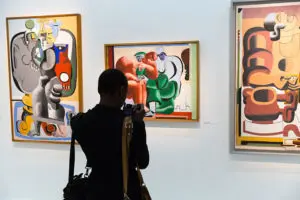
Offer two or three events in the gallery each year that are just for fun and have no sales component. You’ll be surprised by how many people will come through your door who would not have otherwise done so. Ideas might include wine tasting, artistic holiday craft workshops, yoga classes, food truck night or listening to a concert in the gallery. Sell tickets to help cover the costs. These events may be the perfect opportunity to partner with other businesses with a like-minded client base.
Meeting Audiences Where They Are:
The pandemic hit museum attendance hard, and the recovery has stalled for many institutions. Museums are responding by taking exhibitions to the people through regional traveling shows, pop-ups, and partnerships with libraries, cultural organizations, and shopping districts. The scale is smaller than the blockbuster global tours of past decades, and that is exactly what makes the approach achievable for smaller organizations.
Gallery Takeaway: If foot traffic is slow or if your gallery experiences seasonal slow periods, look for pop-up opportunities or partnerships with other organizations that attract a similar audience. Clubs, cultural organizations, libraries, and shopping centers within your region may be a way to increase the visibility of your artists’ work and the gallery. Think outside the box. If, logistically, this is not possible, you could run very focused campaigns promoting a virtual experience in new markets.
Marketing:
Museums are doing a very good job of marketing their exhibitions and events to create a buzz far in advance. They start promoting their shows early and consistently build the excitement up to the opening or event date. When people visit a museum, it is hard to leave without learning what else they could do or see in the next three or four months. This is an easy lesson a gallery could steal. This helps people get excited to visit again and make plans or want to connect with the museum to get reminders about future fun.
Gallery Takeaway: Small to mid-sized galleries I find rarely promote anything going on in the gallery more than a month or two out. Your gallery patrons are bombarded with information and options for how to spend their time and money. It is critical to formulate a marketing calendar and plan that allows for the promotion of future gallery experiences and opportunities. The repetition of messages is so necessary today in our distracted society.
Promoting early and often will make a huge difference. You can’t simply repost an event’s who, what, when, and where in your newsletter or social media pages. Build anticipation by trickling out new information to keep your message fresh and keep prospects’ attention. But of course in order to do this, you have a to plan your year better.
Reaching Younger Audiences:
Museums have also learned that younger visitors want to participate before they commit to visiting. Short videos of installations coming together, staff picks, and artist studio visits give Gen Z audiences a way to engage with an institution’s story between shows. That ongoing participation is what turns a social media follower into a first-time visitor, and eventually a member.
Gallery Takeaway: Treat your social channels as a year-round story about your gallery rather than a billboard for openings. Post the install process, the artist’s perspective, and the moments between shows. Invite younger audiences into the story early, and they will show up in person when it matters.
Technology With a Purpose:
Museums have grown more selective about screens. The current thinking favors technology that deepens engagement or improves access, and it treats a screen-free moment as a legitimate design choice. Artificial intelligence has entered the picture as well. Museums are using AI to draft accessible descriptions of artworks, answer common visitor questions, and personalize follow-up communication. A recent industry report concluded that AI, used well, strengthens the human connection to museums rather than replacing it.
Gallery Takeaway: Think small and purposeful. Use AI to draft first-pass wall label text and accessibility descriptions, then edit them so they sound like you. Add a QR code beside key works that plays a two-minute story from the artist or gallery director. The goal is to remove friction for visitors and free up your team’s time for the personal touch.
All these tactics are helping to initiate a conversation, not only with the museum but also through increased word-of-mouth among visitors’ friends and colleagues. Museums have become more skilled at creating a buzz. They have also successfully created a feeling of participation and a more dynamic experience. This is helping to change perceptions toward museums as exciting destinations to revisit. It also helps nurture an appreciation for art.
Your gallery doesn’t need to adopt all of these, but consider your situation and goals and try a few of these ideas. Be sure to give them enough time to take hold with your audience. Rome wasn’t built in a day. Don’t give up on a strategy too early.
To The Point

 Both museums and commercial fine art galleries want the same outcome. They want people who come through the door, connect with the art, and keep coming back. Museums have funded the research, tested the strategies, and published the findings. Now you just have to mold it to your gallery’s needs and have fun with the process. The latest data makes the priority pretty clear. Frequency and relevance drive attendance now, and participation builds both.
As a gallery owner or director, it is worth a close look at how museums are run, how they are meeting these challenges, and where they are investing their resources. The lessons transfer to a gallery of any size, and they could help you step outside the white cube and change how prospective buyers in your area see your gallery.
Pick one or two ideas and put them on your playbook. Small moves, done consistently, will attract new collectors and nurture the future of your business. Sales will surely follow, just as membership is rising for the museums that have evolved with intention.
You may also enjoy these related articles:
Art Gallery Space: 5 Ways to Improve Foot Traffic & Visitor Experience
Creating an Art Exhibition Sales Strategy
How to Modernize your Gallery’s Buying Experience to Sell More Art


Leave a Reply